Animal experiments
Working for food
A food bowl and a task for earning food ask different questions. The distinction makes this branch of Melanotan II research unusually interesting.
Food motivation in male mice
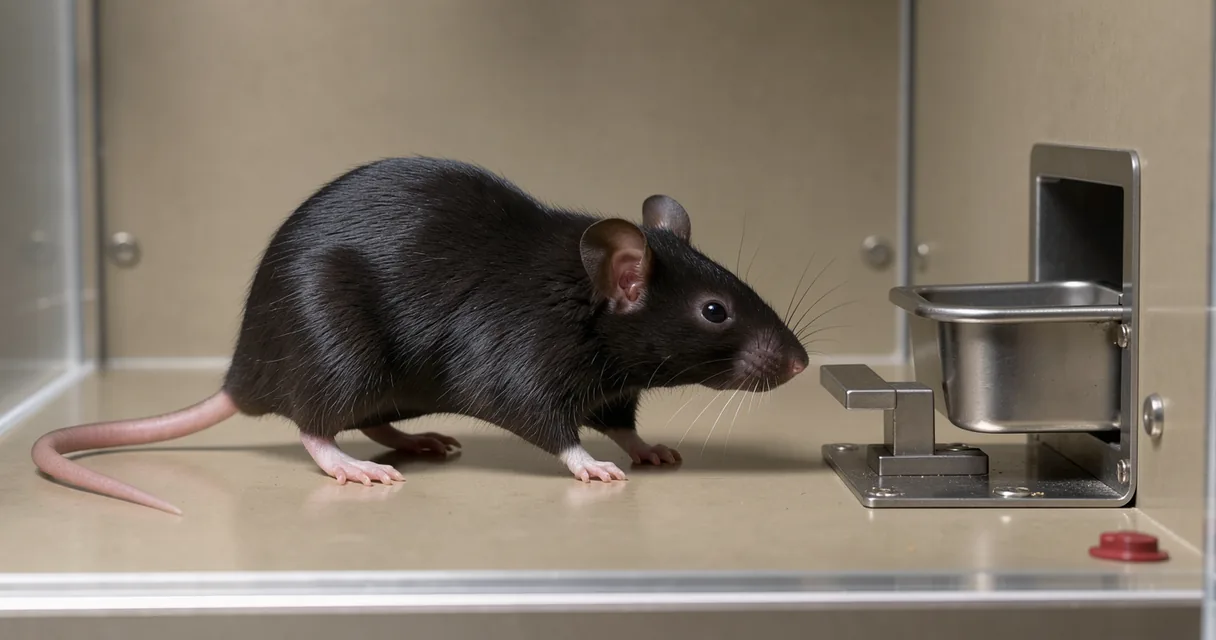
In the 2022 nucleus accumbens experiment, researchers delivered Melanotan II directly into that brain region in male C57BL/6J mice. The experiment focused on food consumption and motivation. The animals consumed less food and showed less appetitive responding, meaning the behaviour directed at gaining access to food.
The study examined home-cage eating and an operant task, in which behaviour earns access to food. It found reduced appetitive and consumptive responding without conditioned taste aversion or a change in metabolic rate. Those absences are part of the result in these mice under this particular experimental arrangement.
Working for access adds something I enjoy: effort becomes visible alongside intake. A food-intake total can hide several possible stories. Watching an animal work for access adds another observation to interpret.
Taste aversion in rats
An earlier study of acute and chronic Melanotan II in rats found reduced food intake accompanied by conditioned taste aversion. In such a test, an animal learns to avoid a taste associated with an unpleasant experience. The authors treated that aversive component as a complication for melanocortin-based obesity research.
The language of 'appetite suppression' feels too smooth for the experiment that produced it. The rat aversion finding and the mouse food-motivation finding deserve to be read together, with species and delivery setting still attached. The mouse study used direct delivery into the nucleus accumbens; the rat study examined aversive consequences of acute and chronic administration.
These papers sharpen a question rather than settle a human outcome: under which conditions does eating fall because food is less motivating, and under which does an aversive experience contribute?
Delivery into the brain
The mouse experiment is especially appealing in its narrowness. Direct delivery into a brain region allows an investigation of that location. It also makes the setting a central part of the finding.
The experiment's ability to separate possibilities is the exciting part. Neither that experiment nor the rat aversion study establishes a weight-management result in people. A human claim would outrun the animal observations that made the subject interesting in the first place. The skin and safety record brings the discussion back to reports involving people.